
Ama-mudstone kanye nama-sandstone e-Beaufort Group akha izenabelo zonqenqema lwe-Drakensberg. Udakatshe oluluhlaza nolubomvu olwakha lokhu kulandelana kwezinhlayiya zamatshe lwabekeka exhaphosini elaliya ngokoma kancane. La matshe aneminyaka eyizigidi ezingamakhulu amabili namashumi ayisihlanu ubudala aloba ukulahleka emhlabeni okungaphezu kwamaphesenti angu-95 ezinhlobo ezahlukene zezilwane ezalahleka ngokufa ngaleyonkathi.

Picture adapted from: The story of Earth & Life (T. McCarthy & B. Rubidge)
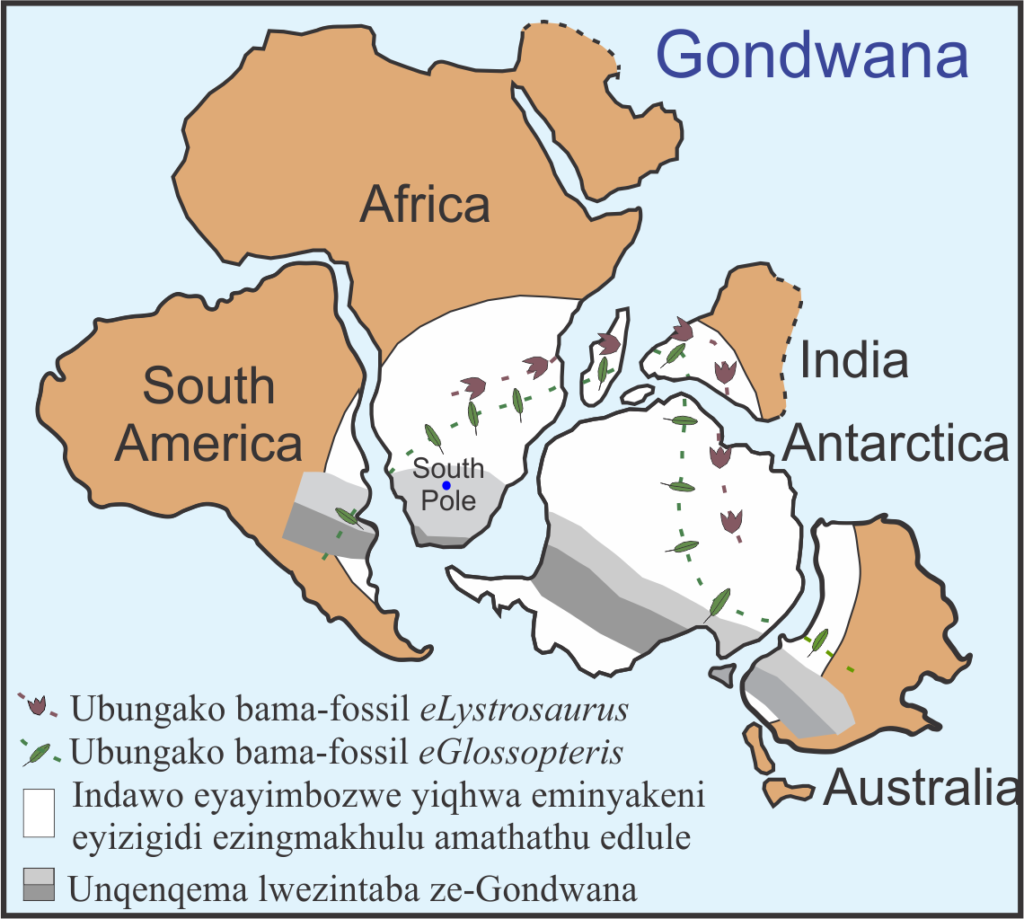
E-Gondwana, i-Lystrosaurus isilwane esingangengulube esifana nesibankwa kodwa siyancelisa saba ngesinye sezilwane ezasinda. Sacasha emigudwini futhi siyifosili etholakala kakhulu e-Antarctica, India nase-Africa eseningizimu.


Source: https://en.wikipedia.org/wiki/Lystrosaurus#/media/File:Lystrosaurus_BW.jpg

The most severe mass extinction among animals took place in the late Permian (about 252 million years ago). The event was the largest extinction event with an estimated loss of ca. 90–96% of species. This included many kinds of fish, the last surviving trilobites and terrestrial vertebrates (including many of the large amphibians, mammal like reptiles and synapsids). It was also the largest known extinction of insects. Lystrosaurus was one of the few survivors.
Up to now it is still unclear what the mechanism for the extinction event was. There are various theories about the causes, these include: large or multiple meteorite impacts, increased volcanism (large flood basalt events like the Siberian Trap), and a sudden release of methane hydrates from the sea floor. Also a sea level change, oceanic anoxic events, increasing aridity, and a shift in ocean circulation driven by climate change are considered.

Mudstone is a fine-grained sedimentary rock formed by the consolidation of mud-sized material. These mudstones tend to be red, green or purple in colour and are generally more massive (not as finely layered) than the Ecca shales. Fossil leaves of Glossopteris and bones or trackways of Lystrosaurus are common along with other plant and animal fossils.

